Forget office towers and warehouses, the hottest thing going up in Australia right now is data centres.
We crunched the lates ABS building activity and AEMO data. The building category that includes data centres has jumped from the fourth-largest type of private non-residential construction to the largest in a single year, with $18.2 billion of new work starting in 2025-26. Six years ago, it ranked 14th out of 15.
Most of it is nowhere near finished. Data centres take years to build, so there's now $18.3 billion of work still to be done, almost all of it in NSW and VIC. Those are the same two states about to lose two of their biggest coal power stations.
Data centre construction in Australia: the numbers
- $6.4 billion of data centre construction was completed in 2025-26, nearly double the prior year.
- Data centre construction starts tripled to $18.2 billion in 2025-26, making it Australia's largest private non-residential building category, up from fourth place the year prior.
- Only 13 cents of every dollar started in data centre construction was completed in 2025-26, compared to 72 cents across private non-residential building generally, reflecting the multi-year build cycle.
- New South Wales and Victoria account for 91 per cent of current data centre construction and hold 96 per cent of national electricity demand for the sector.
- New South Wales holds 66 per cent of east coast data centre electricity demand to Victoria's 30 per cent, though Victoria's construction share at 44.3 per cent already exceeds its demand share at 30 per cent.
- AEMO projects data centre electricity consumption on the east coast and south-east grid will triple by 2029-30 and comprise 13 per cent of total grid demand by 2035-36.
- Victoria will lose Yallourn coal plant in 2028 and New South Wales will lose Eraring in 2029, removing major generation capacity as data centre electricity demand surges.
- If current construction rates hold, approximately $9 billion of data centre work will be completed in the current financial year.
Where are data centres being built?
Almost entirely in NSW and Victoria. NSW accounted for 46.6% of construction in 2025-26 and Victoria 44.3%, so 91% between them.
The two states also hold 96% of data centre electricity demand in the National Electricity Market (NEM). NSW leads with 66% to Victoria’s 30%, but Victoria’s share of construction is already well ahead of its share of demand.
How much power will data centres need?
Data centres chew up heaps of power, so these new data centres will use a lot of energy. AEMO expects data centre electricity consumption in the NEM to triple by 2029-30 and make up 13% of total grid demand by 2035-36.
That growth lands right as two big coal stations close: Yallourn in Victoria in mid-2028 and Eraring in NSW in April 2029.
What does it mean for Aussie homes and businesses?
That shows a clear picture: a surge in electricity demand from data centres at the same time as Yallourn and Eraring leave the grid. With AEMO projecting the sector's consumption to triple by 2030, that's a lot of new pressure on a system that's already rapidly changing.
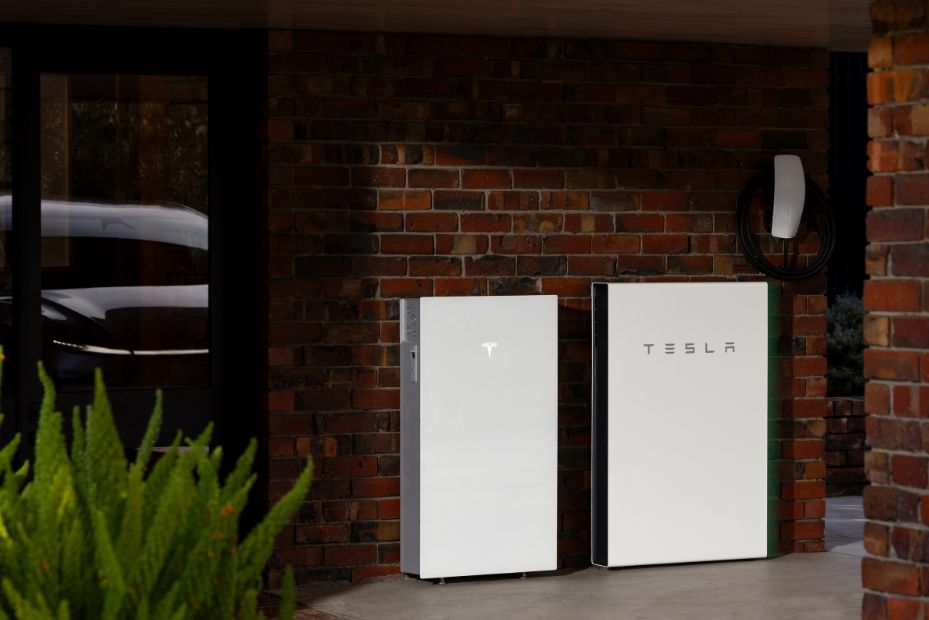
For households, the takeaway is simple: you can't control how much power the grid needs to provide, but you can control how much you rely on the grid. Solar and batteries have never made more sense, letting you generate your own clean, free electricity to use throughout the day and store for use during peak periods or in a blackout. Data centres are being built regardless, so the question is whether your home is ready to cope with the fallout.
Same goes for businesses, just on a bigger scale. If you own a business and pay a power bill, commercial solar and batteries let you make a big chunk of your own energy instead of buying it off a tightening grid.