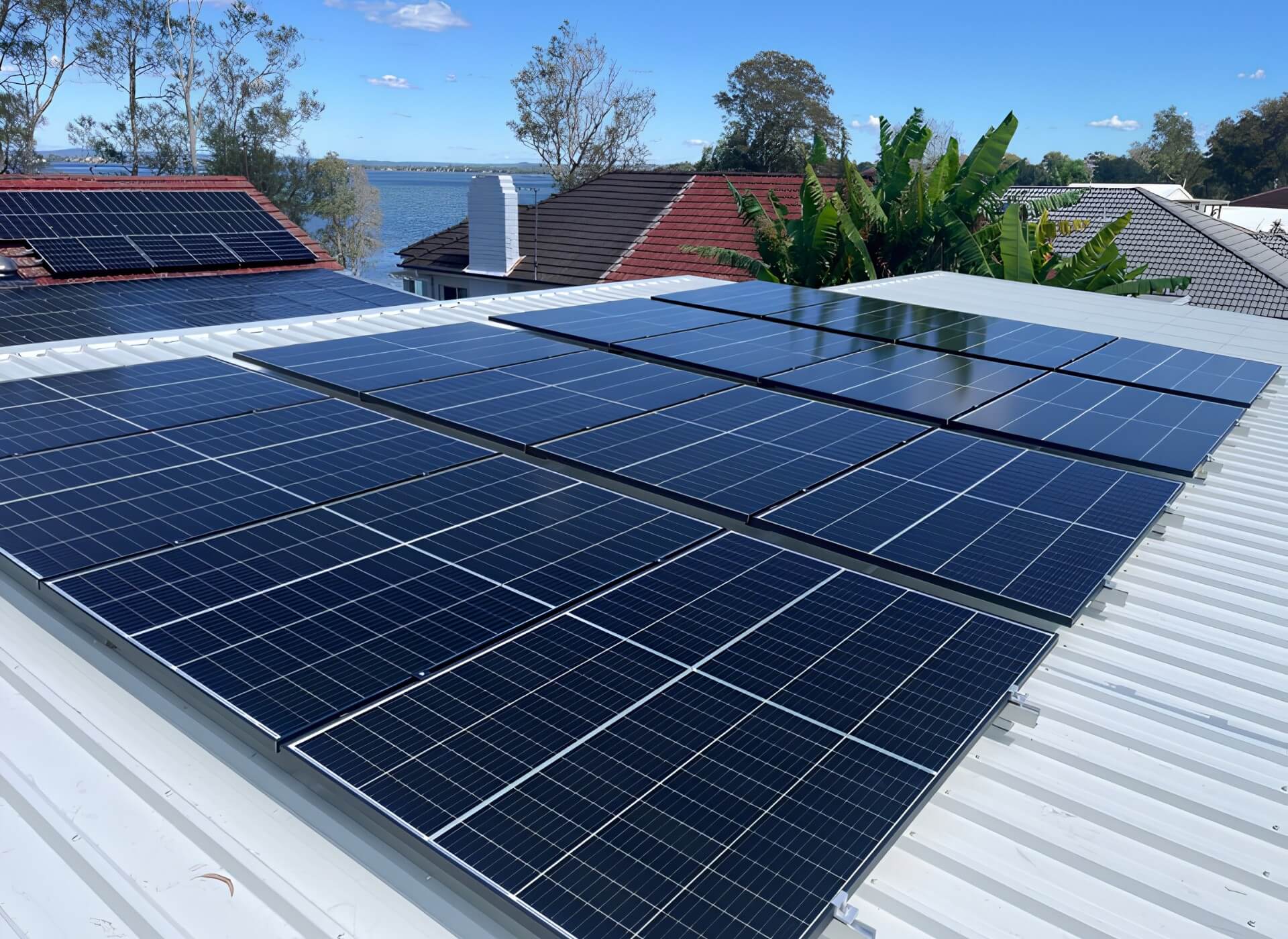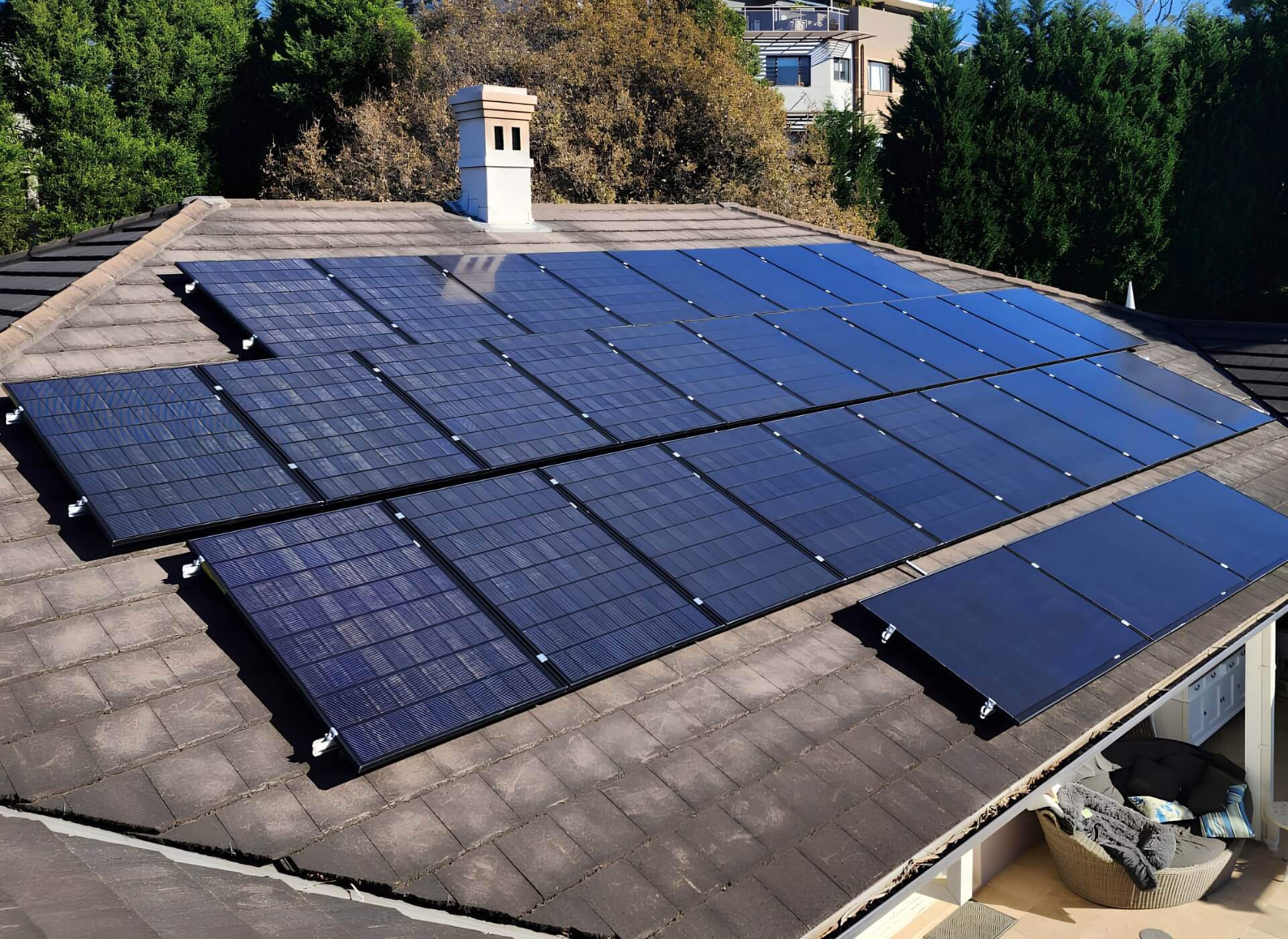

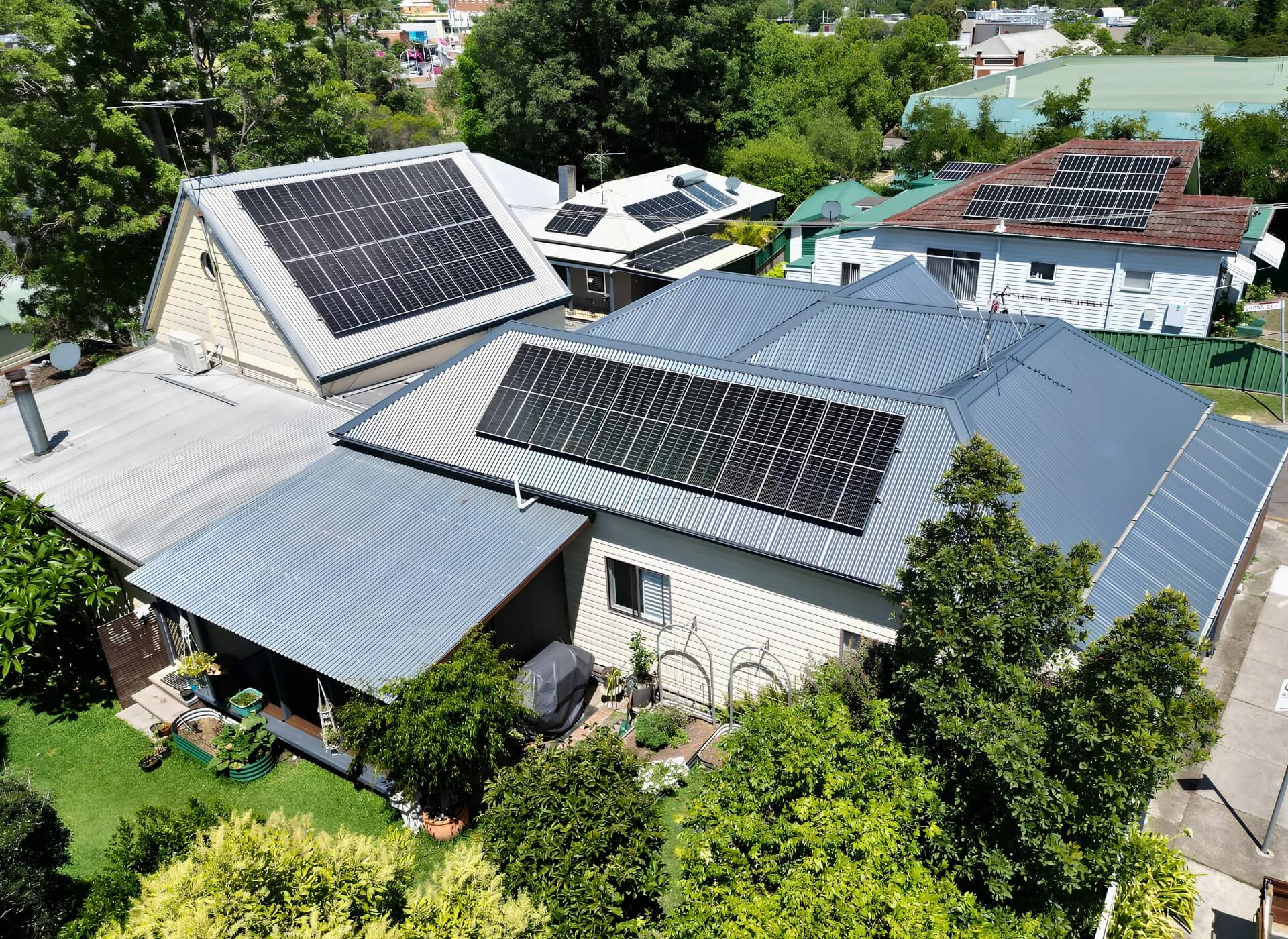
It's one of the first questions people ask when they start looking at solar: which direction should the panels face? In Australia the textbook answer used to be "north, always north." But now things are a little different.
In a lot of cases, the best direction is whichever way your roof happens to point. Most solar systems are retrofitted to existing homes, so you're working with the roof you've got.
But there's a fair bit of nuance worth understanding before you sign off on a system, because the direction your panels face affects how much electricity they generate, when they generate it, and ultimately how much money your solar saves you. Let's get into it.
The quick answer
In Australia, north-facing solar panels produce the most electricity over the course of a year. If you're chasing pure generation numbers and nothing else, north wins.
But pure generation isn't the only thing that matters. What matters more in 2026 is self-consumption, which is how much of your solar electricity you actually use yourself, versus how much you export back to the grid.
The reason that matters comes down to dollars. A kilowatt-hour you generate and use yourself saves you the full retail rate of electricity, which is usually somewhere between 30 and 45 cents. A kilowatt-hour you export back to the grid earns you a feed-in tariff, which is now often somewhere between 4 and 10 cents (and in some places, almost nothing).
So a kWh used at home can be worth three to ten times more than a kWh exported. That changes everything.
Why the old "north is best" rule has changed
A decade ago, feed-in tariffs were generous (60 cents or more per kWh in some states) and solar panels were expensive. The smart play was simple: face the panels north, generate as much as possible, sell every spare kWh to the grid, cash the cheques.
Two things have changed since then.
Feed-in tariffs have dropped. As more households got solar, the grid got flooded with cheap daytime power and retailers dropped their feed-in rates. Some networks now even charge you for exporting too much (the so-called "sun tax").
Solar panels have gotten dirt cheap. Per watt of capacity, panels cost a fraction of what they did 10 years ago. That means you can fit more panels on your roof without blowing the budget.
The new game is generating power when you'll actually be home to use it, and filling your roof with enough capacity to cover your usage no matter the direction.
How each direction stacks up
Here's how the main orientations perform in Australia, using north-facing as the benchmark.
North. Maximum annual generation. Best total output. Suits households that are home during the day, or that can shift big appliances (washing machine, dishwasher, pool pump) to the middle of the day.
North-east or north-west. Around 5% less output than north. Generation skews slightly toward morning (north-east) or afternoon (north-west). For most households, the difference from due north is barely noticeable.
East. Around 15% less than north overall. Generates strongly in the morning and tapers off by afternoon. Suits early risers who use a lot of power before work, or households that run heating in winter mornings.
West. Around 15% less than north overall. Generation ramps up in the afternoon and peaks one to two hours after midday. Brilliant for households that hammer the aircon in summer afternoons, or anyone who's out during the day but home from late afternoon onward. In states with time-varying feed-in tariffs (like WA, where the afternoon export rate is higher), west can actually pay better than you'd expect.
East and west split. Around 15% less total generation than all-north, but produces a smoother, more even output throughout the day. This is often great for self-consumption because there's solar coming in from sunrise to sunset. Steep roofs make the split even more effective.
South. The worst direction on paper, but not the disaster it used to be. In Sydney, south-facing panels produce about 30% less than north. In Townsville, that gap shrinks to around 15%. In Darwin, it's about 17%. The further north you go in Australia, the smaller the penalty for facing south. Given how cheap panels are now, even south-facing can be worth doing if you've got nothing else available.
Your routine matters more than you think
Once you understand that self-consumption is the goal, your daily routine becomes a bigger factor than the direction itself.
Morning households (school-aged kids, early shift workers, heaters running on cold mornings): East or north-east panels capture the morning sun when you need the power.
Afternoon and evening households (everyone home from 3pm, aircon flat-out, EV plugged in after work): West or north-west panels capture the afternoon sun when your usage spikes.
At-home-all-day households (retirees, work-from-home, families): North or an east/west split gives you a long, even spread of generation.
Out-of-the-house households (no one home from 8am to 6pm): This is where it gets interesting. Without a battery, you'll export a lot of your solar. North maximises export earnings. West-facing panels can help you self-consume more when you get home in the evenings.
Location matters too
The further north you live in Australia, the higher the sun sits in the sky, and the more flexibility you have with panel direction. Brisbane has a much wider sweet spot than Hobart.
The further south you go, the lower the sun, especially in winter, and the more it pays to get your panel direction (and tilt angle) right. If you're in Tassie or southern Victoria, sticking close to true north and a reasonable roof pitch gives you the best chance of strong winter generation.
You can't change where you live, so don't lose sleep over it. Just make sure your installer knows their stuff and is choosing the best layout for your specific location.
Roof pitch and tilt matter as well
The angle your panels sit at (called the tilt) also affects output. As a general rule, the ideal tilt in Australia roughly matches your latitude. For example, Sydney sits at around 33 degrees south, so a tilt of about 30 to 35 degrees is close to optimal.
Most Australian roofs are pitched somewhere between 15 and 25 degrees, which isn't perfect but is generally close enough. Tilt frames can be used to angle panels more steeply on flat roofs, but on standard pitched roofs the panels usually just lie flush.
The takeaway: don't obsess over tilt. Direction matters more, and unless you're installing on a flat roof, your tilt is already set by your roof.
What about batteries?
A solar battery changes the maths in a big way. With a battery, any excess solar generated during the day gets stored, then used later when the sun's down. That means your panel direction matters less, because you're self-consuming far more of what you generate regardless of when it's produced.
If you've already got, or are planning to install, a battery, you can lean a bit harder toward maximum generation (which means more north-facing). The battery handles the timing for you.
What about inverters?
The type of inverter you have also affects how many directions you can split your panels across.
String inverters are the most common type in Australia. Many can handle two or three directions at once, but smaller ones may only handle one. Some installs use multiple string inverters to cover more directions.
Microinverters and power optimisers are tiny devices fitted to each panel, making each panel independent of the others. With these, you can split your panels across as many directions as your roof allows, with no impact from one section to another.
If you've got a roof with three or four distinct sections facing different ways, microinverters or optimisers are often the better technical fit.
The modern Aussie approach: just fill the roof
Here's the punchline: if your budget allows and your roof has the space, just fill it.
Panels are cheap. Self-consumption is the prize. And in the future you're almost certainly going to add a battery, an EV, a heat pump, or all three, all of which dramatically increase your electricity usage. A roof packed with solar gives you the headroom to power all of that from your own generation, regardless of direction.
A 13 kW system with panels facing east, north and west will outperform a small north-only system in almost every real-world scenario.
What we'd actually recommend
Here's how to think about it, in order of priority:
- Talk to your installer about your daily routine and your roof. A good installer will design a layout that matches your usage, not just stick everything on the sunniest section.
- Don't dismiss east or west. With current feed-in tariffs, an east/west split often beats a smaller north-only system on dollars saved.
- Don't be afraid of some south. Especially in northern Australia, or if you're filling a big roof and just need extra capacity.
- Get bigger, not just smaller-and-perfect. A larger system almost always saves more money than a small, perfectly-oriented one.
- Think about a battery. If you've got, or are planning, a battery, direction matters less.
Remember, when it comes down to it, sometimes if it doesn't make dollars, it doesn't make cents.
Ready to figure out the right setup for your roof?
Every roof is different, and so is every household. Our team will look at your roof, your usage, your budget, and your goals, then design a system that maximises savings for your specific situation. Request a free quote to get started.
Frequently asked questions
North gives the highest total annual generation, but the best direction for you depends on when you use power. If you're home during the day, north is great. If you're home mainly in the afternoon or evening, west often beats north on actual dollar savings.
No. They produce the most electricity overall, but if a lot of that electricity gets exported back to the grid at a low feed-in tariff, you might save more money with east or west-facing panels that match when you actually use power.
A battery makes panel direction less critical, because you can store excess solar from any direction and use it later. That tips the maths back toward maximising total generation (which favours north).