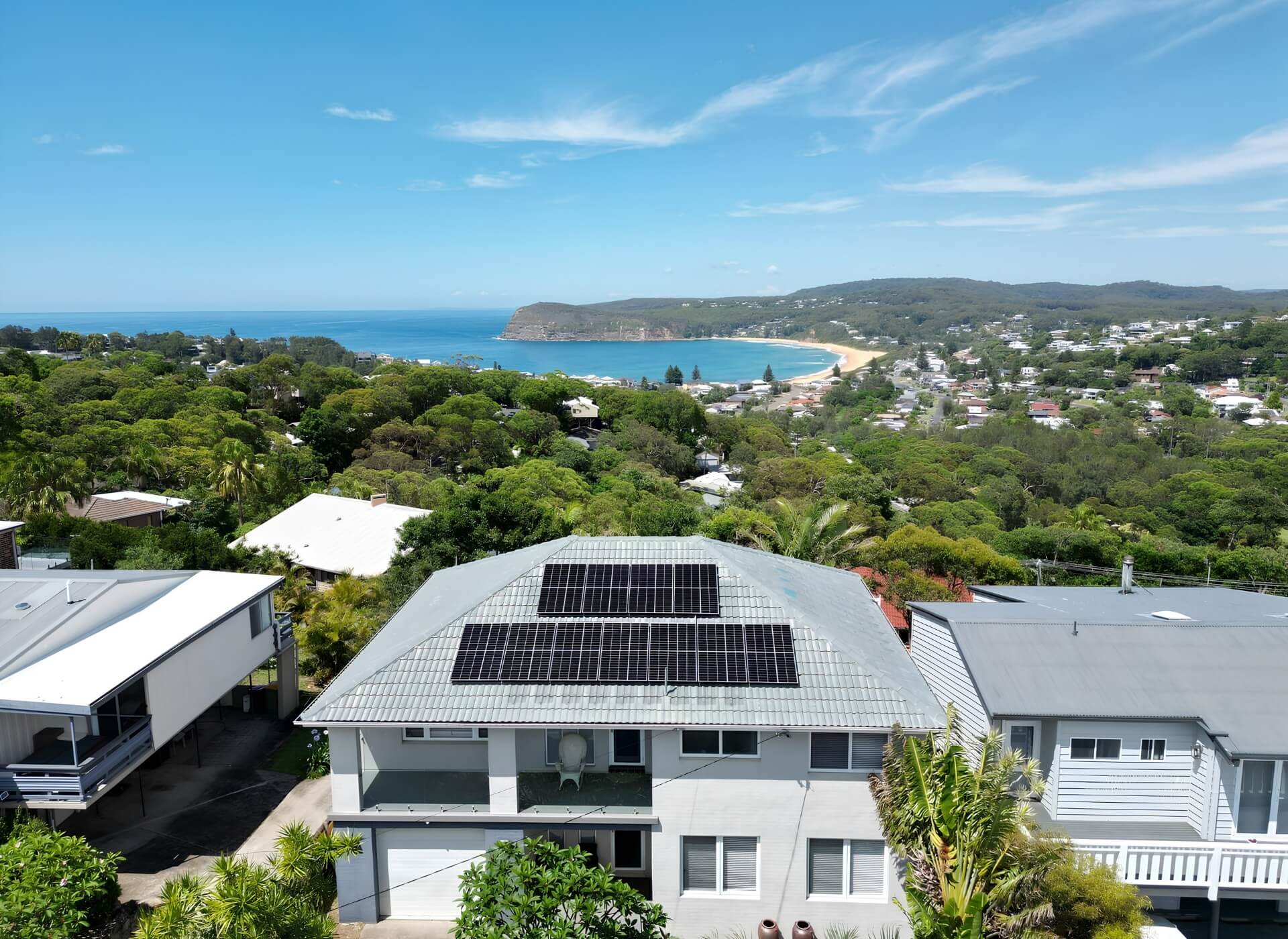
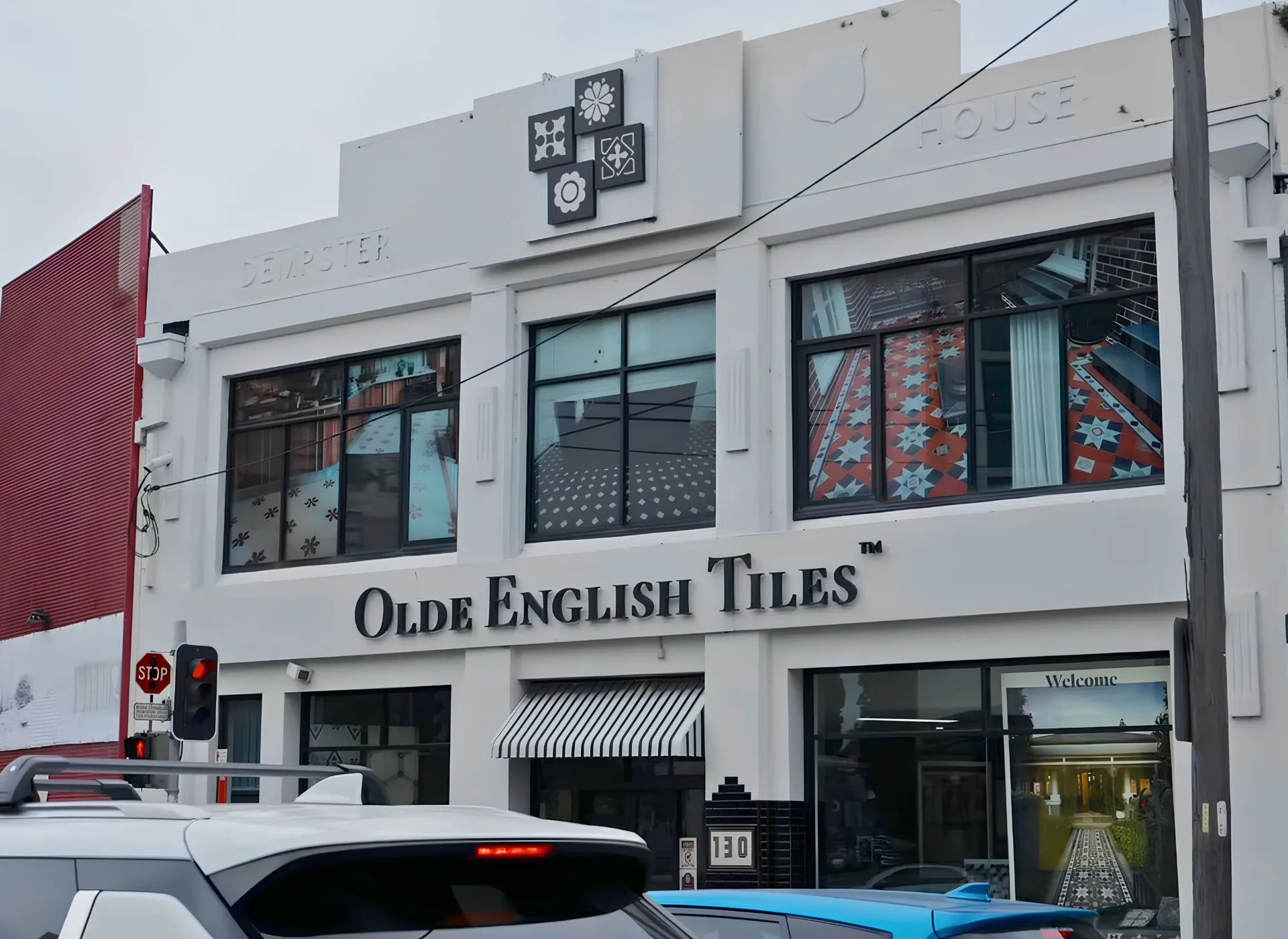
Gas is an expensive way to fire a kiln. Olde English Tiles had already made the move to electricity and had solar on the roof, but two things were still holding them back: the sun sets, and their grid connection could only deliver so much power.
Green.com.au proposed a battery solution that solved both problems without a costly transformer upgrade: a 100kWh Sungrow PowerKeeper battery and 110kW hybrid inverter, installed at their Leichhardt warehouse.
About Olde English Tiles
Olde English Tiles is a family-owned Australian business that has been supplying and installing heritage tessellated, encaustic, mosaic and glazed tiles since 1982. Founder Antonino Gaudioso revived the tessellated tile trade more than 50 years ago, and the business has grown from a one-man band into a small team with showrooms and factories in Sydney and Melbourne. Their restoration work includes the Queen Victoria Building and Strand Arcade in Sydney and Parliament House in Melbourne.
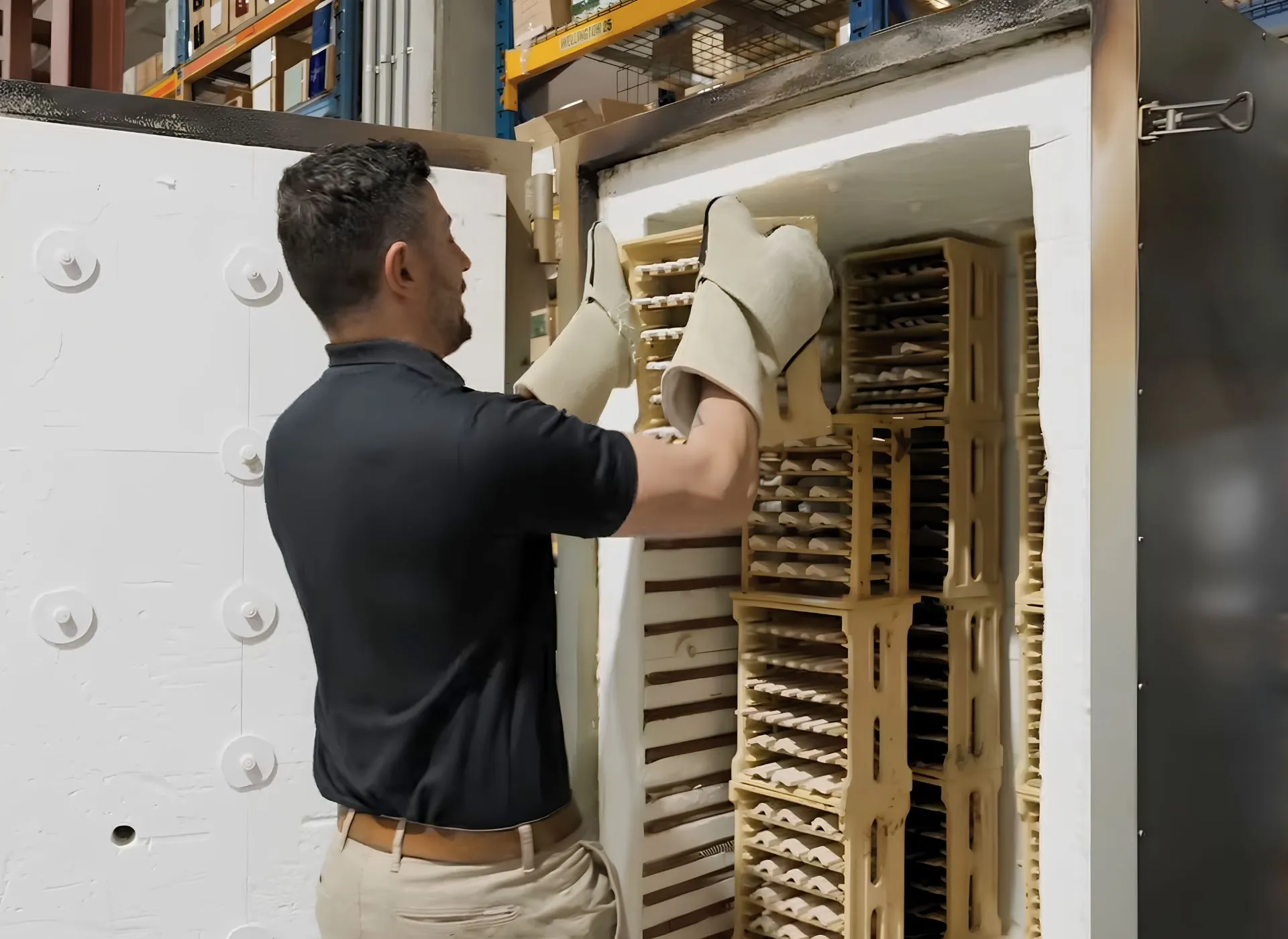
They still make tiles by hand in their own factories, which means kilns, and kilns mean a lot of energy.
Dom Gaudioso, Head of Design and Technology at Olde English Tiles, first worked with Green.com.au as the solar champion behind an apartment solar install at the complex where he owns an apartment, a project we delivered with SoAR using an Allume SolShare device. After a successful install for his strata committee, Dom got in touch with our Head of Commercial, Abby Carbines, about adding a battery to the existing solar at the company's Leichhardt warehouse.
The challenge
Olde English Tiles used to manufacture everything with a gas kiln. With gas prices high, they wanted to move away from it and adopt electricity as the fuel source for their kiln process.
"Gas is a very expensive energy source, so for us, we wanted to move away from gas and we wanted to adopt electricity as our fuel source for our kiln process."
Dom Gaudioso, Head of Design and Technology, Olde English Tiles
Solar was already doing a great job offsetting their daytime consumption, but it meant firing the kilns during the day to use all that energy. As the sun began to set, they had to start drawing from the grid, which crept into peak time, when power is at its most expensive. The business was adapting the way it ran its kilns to fit around its solar production.
There was a bigger problem too. As Olde English Tiles added more box kilns to increase production capacity, they ran into the limit of their inbound grid supply. Upgrading it meant installing a transformer, and the cost just wasn't achievable.
The solution
The Green.com.au commercial team got creative. Rather than upgrade the grid connection, they proposed a battery that expands the usable supply on site, letting Olde English Tiles add more kilns without a transformer.
The system is a Sungrow SH110CX hybrid inverter paired with a 100kWh Sungrow PowerKeeper battery. Solar charges the battery whenever it's producing more than the site is using, and that stored energy is there when the sun goes down.
Sungrow's PowerKeeper is different than many batteries. Batteries normally need to be spaced out because of the heat, but the PowerKeeper's redesigned ventilation lets them sit close together and take up about half the space. It's also expandable, so Olde English Tiles can add more batteries later, up to a megawatt-hour of storage.

The process
Our number one aim on every commercial project is to make the process stress-free for the client. We don't want to add to your workload, we want to take away from it.
Before proposing anything, the Green Team dug into how Olde English Tiles actually uses power. That meant looking at their energy usage, how much of their solar was being exported rather than used on site, and when their peak demand times hit. It showed where the pressure was: solar covering the daytime, kilns pulling from the grid as the sun set, and an inbound supply that couldn't keep up with a growing operation.
From there, we proposed the right battery storage to solve those problems, sized around their usage rather than off the shelf. We also looked at every available government incentive to bring the cost of the project down, so the numbers worked for the business as well as the site.
Then came the install. Some existing infrastructure had to be moved to make room for the system. We took care of all of it. Olde English Tiles didn't have to lift a finger, or find and manage a subcontractor.
"There was infrastructure that had to be moved in order to accommodate the battery system, and Green was able to coordinate all that, so I didn't have to worry about going out getting a subcontractor myself. Green just managed it. That was another reason why we just felt so great about the whole Green experience."
Dom Gaudioso, Head of Design and Technology, Olde English Tiles
The outcome
The results since the system went live at the end of April are already clear. Over the roughly six and a half months to mid-November, solar and the battery have supplied about 65% of everything the site has consumed, and about 85% of the solar generated has been used on site rather than exported.
"Not having power be a factor in that costing process means that I can reduce the cost per unit and improve our margins."
Dom Gaudioso, Head of Design and Technology, Olde English Tiles
The battery has delivered 11.91MWh of stored energy back to the site, around 1.8MWh a month. Through winter, Olde English Tiles was purchasing about 150kWh a day less from the grid than at the same time last year, before the battery. The system has also reduced emissions by an estimated 62.26 tonnes of CO₂ since install, or about 9.5 tonnes a month.
They're expecting savings to grow from 12–14% in winter to 20–25% in summer, enough to materially impact the cost per unit of production.

What's next
With the extra capacity from the battery, Olde English Tiles can add more units to their kiln process. Dom is quick to credit Abby and the Green team for getting them there, and for him it comes back to the tiles.
"We got a system out of it that really works for our business. And that's exciting for us because all we want to do is make great tiles. And now we have a system that helps support that."
Dom Gaudioso, Head of Design and Technology, Olde English Tiles
The PowerKeeper can grow with them, too. If they decide a year down the track that they could do with more storage, they can simply add more batteries.
Ready to cut your commercial energy costs?
Whether you're running a factory, a warehouse or a sports facility, Green.com.au designs commercial solar and battery solutions tailored to how your business operates and the goals you're working towards. Get started with a free commercial solar & battery feasibility assessment.